LandlordOS
 HOAOS
 PropPay
 PraxiOS
 Engage
 Books
 Field Service
 HCM
 ATS
 FormRelay
 AppOS
Service work is uneven. The phones melt in the first heat wave and go quiet in the mild months, and a shop that lives only on demand calls is always either turning work away or looking for some. A maintenance agreement program, also called a membership or service plan, evens that out. It gives your techs planned work in the slow weeks, brings in money every month and keeps you in front of customers before something breaks.
Why are maintenance agreements worth the effort?
- Steadier revenue. Monthly or yearly plan payments arrive whether or not the weather cooperates.
- Work for the shoulder seasons. Tune-ups are scheduled by you, so you can place them in the weeks when demand calls are light.
- Customers who call you first. A member with a problem doesn’t shop around; they call the company already looking after their equipment.
- Earlier, calmer repair and replacement conversations. A tech who sees the same system every year can point out a failing part or an ageing unit before it becomes an emergency.
The plan itself is not where most of the profit comes from. Treat it as the thing that keeps the relationship, and price it so the visits don’t lose money.
What should a maintenance plan include?
Keep it to a few benefits that a customer can repeat back to you:
- Scheduled visits with a written checklist. For HVAC that is typically one cooling and one heating tune-up a year; for plumbing, an annual inspection with a water heater flush; for electrical, an annual safety inspection of the panel, outlets and detectors.
- A member discount on repairs and other work.
- Priority scheduling when they call with a problem.
- A reduced or waived diagnostic fee, if your numbers allow it.
Avoid promising things you can’t control, such as "no breakdowns", and avoid unlimited anything. One plan is enough to start. Add a second tier only when customers ask for more than the first one offers.
How do you price a maintenance agreement?
Start from what the plan costs you to deliver. For each included visit, add the tech’s time on site, the drive time, any materials such as filters, and a share of overhead, using your real cost per billable hour. Our guide to flat rate vs time and materials pricing walks through that calculation. Multiply by the number of visits, and that total is the floor: below it, every member you sign costs you money.
Then test the member discount. A discount on repairs comes straight out of margin, so work out what it does to a typical repair ticket before you print it on a brochure. A modest discount that you can afford on every job is better than a generous one you quietly resent.
Offer both a yearly price and a monthly one. Monthly billing is easier for customers to say yes to and gives you smoother cash; yearly gets the money up front. Many shops price monthly slightly higher over the year to reflect that.
How do you sell memberships without being pushy?
The best moment is on a service call, when the customer has just had a problem and the tech has just fixed it. Train techs to offer the plan every time, in one or two sentences, and to show the price difference on the job in front of them: what today’s repair costs, and what it would have cost as a member. Put the plan on every quote as an optional add-on so the office doesn’t depend on anyone remembering.
Give techs a small, fixed reward per plan sold, and track sign-ups per tech. The gap between your best and worst is usually about whether the plan gets mentioned at all.
How do you make sure every visit actually happens?
A plan is a promise, and a missed tune-up is the fastest way to lose a member, or to be asked for a refund. Three habits keep you honest:
- Create the visits when the plan is sold, not when someone remembers. Each member should have their next visit on a list from day one.
- Contact members to book a few weeks ahead of the season, and keep trying until the visit is on the calendar.
- Use the same checklist on every visit and leave the customer a copy, so they can see what they paid for.
Before each plan’s renewal date, check that all its visits were done. If one wasn’t, book it before the renewal charge goes through.
What should the written agreement say?
Put the plan in writing: what is included, the price and billing schedule, how the customer cancels, whether it renews automatically and what happens to unused visits. Rules on automatically renewing contracts and on service agreements vary by state, so have the wording checked for where you work.
How DomoDomu Field Service handles memberships
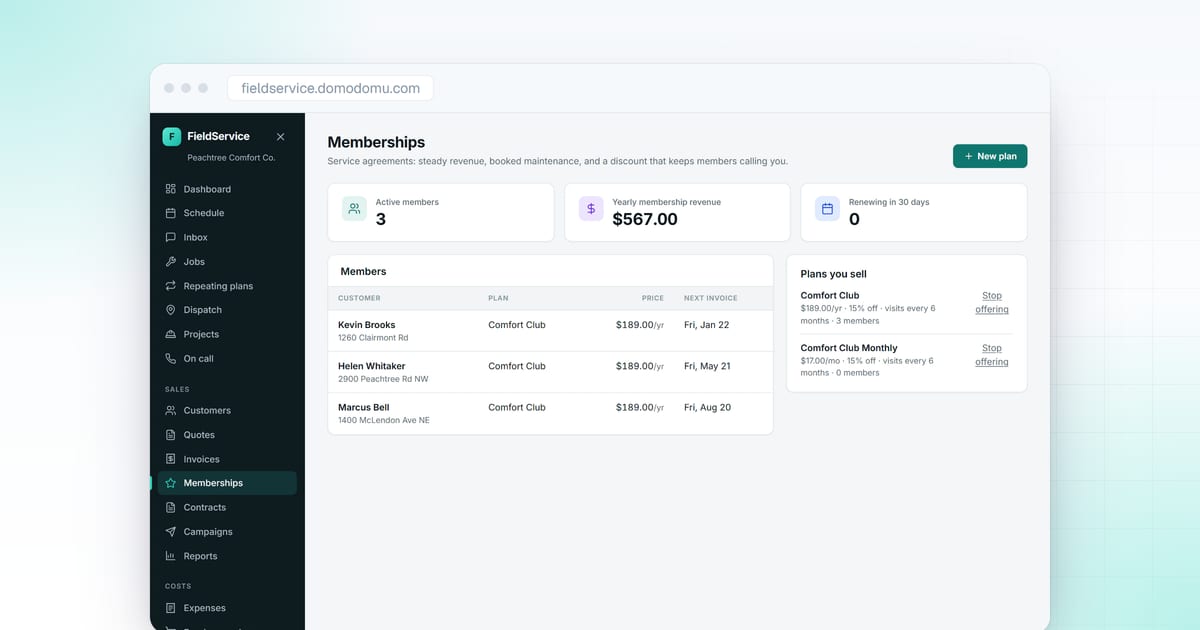
DomoDomu Field Service is in early access for HVAC, plumbing and electrical shops with 1 to 15 technicians. It isn’t open for sign-up yet, and pricing will be published before launch. In it, you set up a membership plan with a monthly or yearly price and a discount on other work. A membership can include maintenance visits, which are added to the schedule as jobs a few days ahead, and reports show how many members you have and what they bring in.
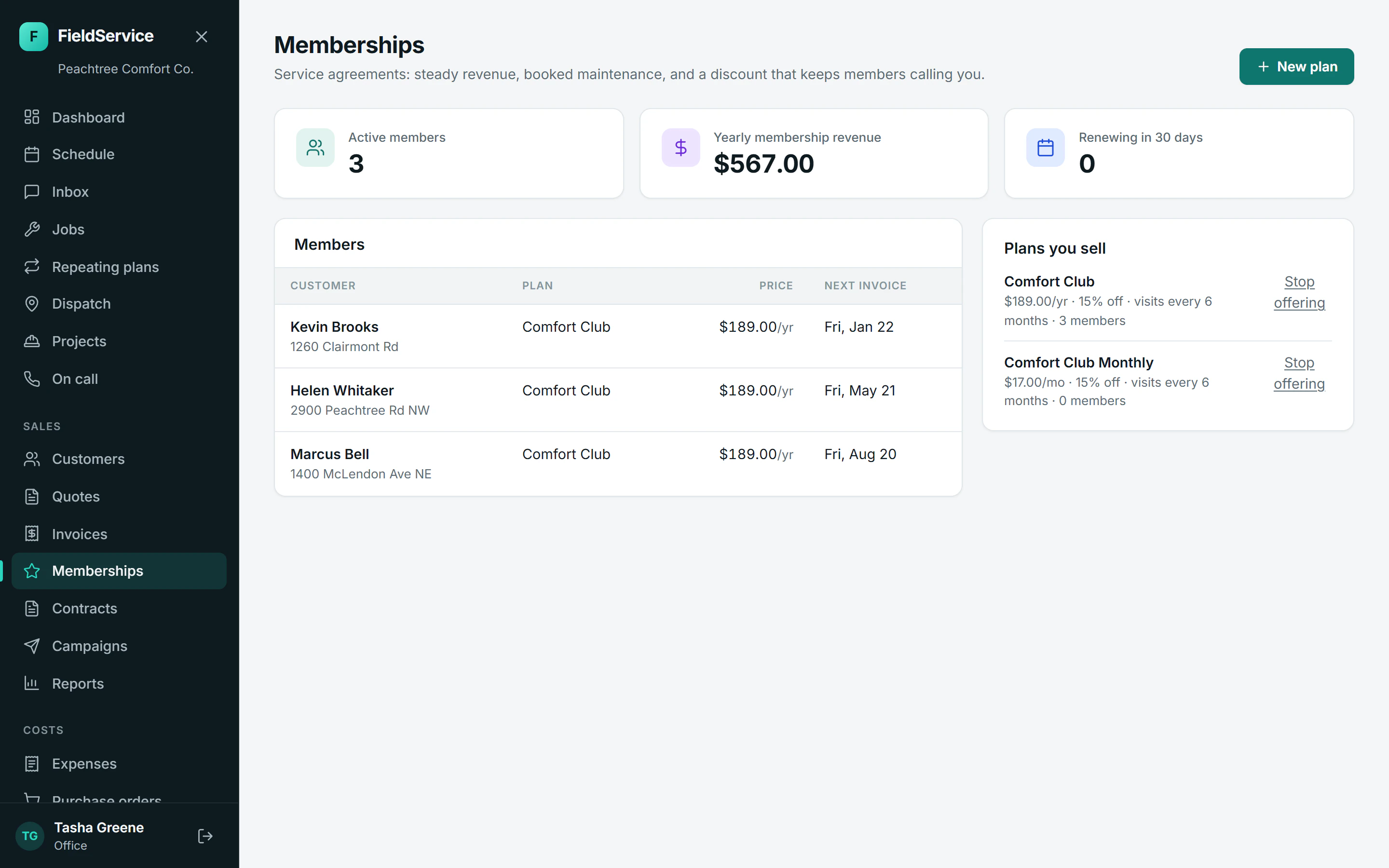
Repeating plans can also be started from a customer’s page without a membership: choose the address, how often, the services on each visit, a tech and an optional time, and pause or end the plan any time. See how scheduling and maintenance plans work and how quotes, invoices and memberships work.